Welcome to FlowGeniQ Digest, where evidence-informed cosmetic guidance meets practical, real-world decision support. If you’re researching a platelet rich plasma facelift, you’re likely looking for a refreshed, younger-looking appearance with a treatment that feels less invasive than traditional surgery. PRP—often described as “liquid gold”—has become a go-to option for improving skin quality, softening early signs of aging, and supporting facial rejuvenation.
In this guide, we’ll break down what a platelet rich plasma facelift typically involves, who it’s for, what results you can realistically expect, potential risks, and how to choose a qualified provider. We’ll also cover recovery expectations and the questions you should bring to your consultation.
What Is a Platelet Rich Plasma Facelift?
A platelet rich plasma facelift is not a single standardized operation. Instead, it usually refers to a combination of PRP injections and/or PRP used alongside other facial rejuvenation approaches—with the goal of improving skin texture, tone, and overall facial vitality. PRP is derived from your own blood: it’s processed to concentrate platelets, which contain growth factors that may support tissue repair and collagen remodeling.
In many facial plastic and dermatology practices, PRP is used to:
- Enhance skin quality (radiance, fine lines, tone)
- Support collagen production over time
- Improve the appearance of mild sagging or tired-looking skin (subtle, not dramatic)
- Complement other treatments such as microneedling, laser, or targeted injectables
Important: While some marketing may use “facelift” as a shorthand, PRP is generally considered a non-surgical or minimally invasive rejuvenation strategy, not a surgical face lift that repositions deeper facial tissues.
How PRP Works for Facial Rejuvenation
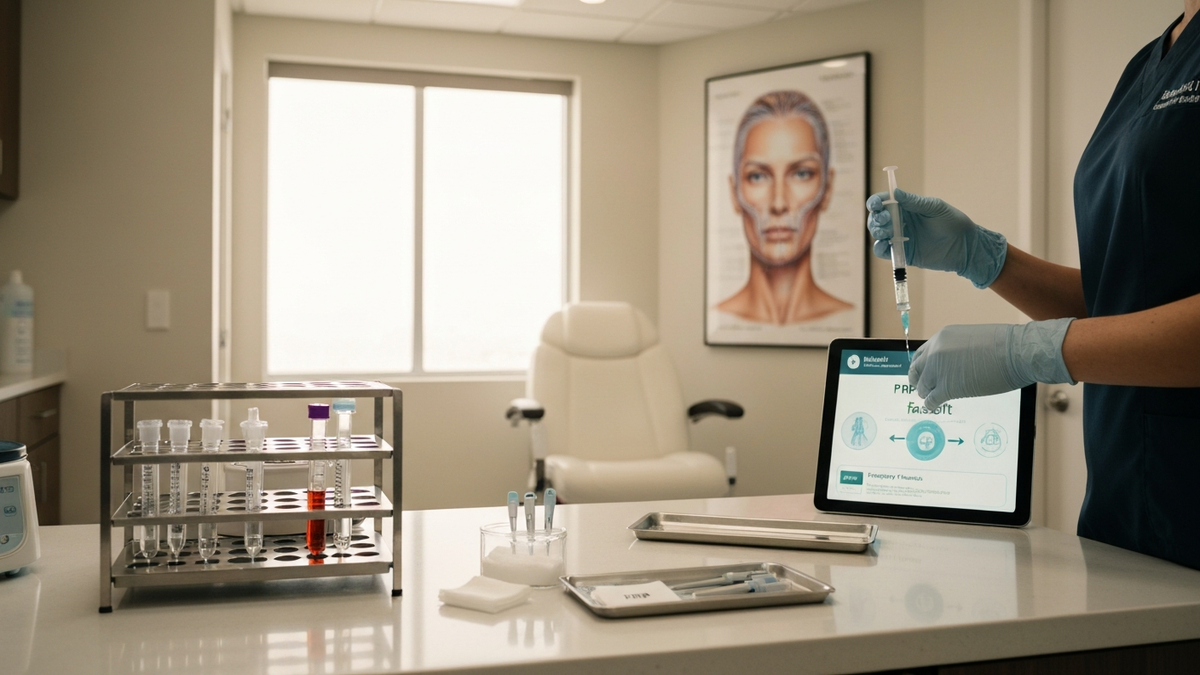
PRP is created by drawing a small amount of blood, then using a centrifuge to separate and concentrate platelets. These platelets release growth factors that can influence wound healing and tissue regeneration pathways.
Why platelets matter
Platelets contain signaling proteins (growth factors) that may help:
- Encourage cellular communication involved in repair
- Support collagen remodeling and skin renewal
- Improve the microenvironment where aging changes occur
What “results” look like with a platelet rich plasma facelift
Because PRP primarily targets skin quality and gradual tissue support, results are typically described as:
- Natural and progressive (often not immediately dramatic)
- Most noticeable in texture, glow, and fine lines
- Potentially helpful for early-to-moderate aging
For patients seeking significant lifting or correction of deeper structural sagging, surgical options may be more appropriate. In a comprehensive facial evaluation, a specialist can help determine whether PRP alone is enough—or whether it should be paired with other strategies.
Platelet Rich Plasma Facelift vs. Traditional Facelift
It’s easy to compare PRP to surgery because both aim to look younger. But they work at different levels.
Non-surgical PRP approach
- Targets skin quality and subtle rejuvenation
- Involves injections and/or PRP preparation used with other modalities
- Typically has shorter downtime
- Results are usually gradual and incremental
Surgical face lift approach
- Repositions deeper tissues and addresses sagging more directly
- Provides more structural change
- Typically requires longer recovery
- Often offers more dramatic transformation for appropriate candidates
If you’re considering a platelet rich plasma facelift, a strong next step is to ask your provider: “What level of change can PRP realistically deliver for my face?” That question helps align expectations with outcomes.
Who Is a Good Candidate for PRP Facial Rejuvenation?
PRP is commonly considered for individuals who want skin improvement with minimal downtime. Ideal candidates often include those with:
- Early signs of aging (fine lines, dullness, uneven tone)
- Desire for a natural look and subtle refresh
- Good overall health and realistic expectations
- Interest in combination rejuvenation (PRP plus microneedling or other treatments)
PRP may be less ideal if you have:
- Significant sagging or deep structural changes that require repositioning
- Expectations for a fully surgical facelift result from injections alone
- Medical factors that make blood draws or procedures unsafe (your clinician will screen this)
In Los Angeles and Beverly Hills, many patients explore a range of head-and-neck rejuvenation options. Specialists who focus on facial anatomy and natural outcomes can help you choose the right plan—whether that’s PRP, a surgical facelift, or a combined strategy.
What Happens During a Platelet Rich Plasma Facelift Appointment?
While exact protocols vary by practice, a typical PRP facial rejuvenation session involves:
- Consultation and facial assessment (goals, skin concerns, medical history)
- Blood draw for PRP preparation
- PRP processing using a centrifuge to concentrate platelets
- Injection and/or topical application in targeted facial areas
- Post-procedure instructions for recovery and skincare
Target areas commonly treated
Providers may apply PRP to areas that reflect early aging or skin quality changes, such as:
- Cheeks and midface (for glow and refinement)
- Perioral and perinasal skin (texture and fine lines)
- Jawline skin quality (subtle improvement in tone)
- Under-eye areas in carefully selected patients (depending on technique and safety considerations)
Because facial anatomy is complex, technique matters. A skilled clinician will consider vascular and structural factors to support safety and natural-looking results.
How Many Sessions Are Needed?
Many PRP facial protocols involve multiple sessions. Common patterns include:
- Series-based treatment (e.g., several sessions spaced weeks apart)
- Maintenance treatments after initial results (often spaced out over time)
Your provider should explain the rationale for their schedule based on your goals, skin quality, and response to treatment. If you’re comparing practices, ask whether they offer a personalized plan rather than a one-size-fits-all protocol.
Platelet Rich Plasma Facelift Results: What to Expect (Timeline)
PRP results typically evolve gradually. While individual responses vary, a common timeline looks like this:
- First few days: mild redness, pinpoint marks from injections, or temporary swelling
- 1–3 weeks: early improvements in skin feel and subtle radiance
- 1–3 months: more noticeable refinement in texture and fine lines as collagen remodeling progresses
- Ongoing: maintenance sessions may help preserve results
To improve your odds of satisfying results, follow your clinician’s pre- and post-procedure recommendations closely—especially regarding skincare, sun exposure, and activity restrictions.
Recovery and Downtime
One reason people choose a platelet rich plasma facelift approach is that downtime is often minimal compared with surgery.
Common short-term effects
- Redness or warmth at injection sites
- Swelling (usually mild)
- Bruising (can occur, especially in injection-rich areas)
- Sensitivity or slight tenderness
Practical recovery tips
- Plan around social events: schedule treatments when you can manage mild visible effects
- Follow skincare guidance: avoid harsh products if instructed
- Limit sun exposure and use sunscreen as recommended
- Avoid strenuous exercise for the period your provider specifies
- Don’t pick or massage unless your clinician instructs you to
Your provider should give clear, written aftercare instructions. If you don’t receive them, ask—reputable clinics make aftercare part of the treatment plan.
Potential Risks and Side Effects
Because PRP uses your own blood, many people perceive it as low risk. However, any injection-based procedure carries potential risks. These may include:
- Bruising and temporary swelling
- Infection risk (rare, but proper sterile technique matters)
- Allergic reactions are uncommon with autologous PRP, but irritation can occur
- Uneven results if technique and dosing aren’t well matched to the face
- Vascular or nerve complications (rare, but why provider expertise is crucial)
Choosing a clinician with strong facial anatomy training and a history of natural outcomes can meaningfully reduce risk. In facial rejuvenation, details matter—especially when treating delicate areas.
Choosing the Right Provider for a Platelet Rich Plasma Facelift
Not all PRP treatments are created equal. When evaluating a clinic, consider:
1) Facial expertise and anatomy-focused training
Look for a provider who specializes in head-and-neck facial aesthetics and understands dynamic and structural facial anatomy. FlowGeniQ Digest often highlights how the best outcomes come from precise, individualized planning rather than generic protocols.
2) Transparent discussion of realistic results
A trustworthy provider will discuss what PRP can and cannot do for your specific concerns—especially if you’re asking for “facelift” level change.
3) Technique, dosing, and protocol clarity
Ask how they:
- Prepare PRP (processing system, quality control)
- Determine injection depth and distribution
- Plan the number of sessions and maintenance
4) Safety standards
Confirm sterile technique, appropriate medical screening, and clear emergency protocols.
5) Evidence-informed approach
PRP is supported by a growing body of research, but outcomes vary. The best clinics use evidence-informed protocols and adjust based on your response.
Combining PRP With Other Facial Treatments
Many patients get more satisfying results when PRP is paired with complementary rejuvenation strategies. Depending on your goals, a provider may recommend combining PRP with:
- Microneedling to enhance texture and promote collagen support
- Laser or resurfacing to address uneven tone (timing matters)
- Other injectables for targeted volume support and fine-line smoothing
In addition, if you’re exploring facial changes beyond skin quality—such as nose refinement—your plan may include other facial plastic procedures. For example, some patients also inquire about Rhinoplasty when they want a more balanced, refreshed facial profile.
Similarly, if you have breathing concerns that affect facial comfort and overall quality of life, it’s worth discussing functional evaluations. In cases involving nasal obstruction, questions about a Deviated Septum or Septoplasty may be relevant. A comprehensive head-and-neck specialist can help you understand both aesthetic and functional options.
Cost Considerations: What You May Pay For a Platelet Rich Plasma Facelift
Pricing varies widely based on:
- Number of sessions
- Treated areas (full-face vs. targeted zones)
- Whether PRP is combined with other procedures
- Provider experience and facility standards
Instead of focusing only on cost, focus on value: the right protocol, safe technique, and realistic outcome expectations. Ask for a clear package breakdown and whether maintenance treatments are included.
Questions to Ask at Your Consultation
Bring these questions to your platelet rich plasma facelift consultation to make the decision process easier and more informed:
- Am I a good candidate for PRP, or would another approach provide better results?
- What specific areas will you treat and why?
- How many sessions do you recommend and what is the timeline?
- What results should I expect at 2–4 weeks and at 3 months?
- What are the potential risks for my situation?
- How do you prepare and process PRP, and what quality controls are used?
- What does recovery look like, and what should I avoid?
Strong answers should be specific, patient-friendly, and grounded in clinical reasoning—not vague promises.
Platelet Rich Plasma Facelift in Los Angeles: Why Local Expertise Matters
Los Angeles is known for advanced aesthetic care and a wide range of facial rejuvenation options. But “available” doesn’t always mean “right for you.” Local expertise matters because:
- Face anatomy and aging patterns vary by individual
- Technique standards differ across providers
- Aftercare planning is essential for progressive results
FlowGeniQ Digest encourages readers to choose providers who prioritize education and individualized planning. In Beverly Hills, for example, Dr. Hootan Zandifar is known for a patient-first, education-forward approach and a commitment to natural-looking solutions. His focus on head-and-neck cosmetic and reconstructive surgery underscores an emphasis on facial anatomy and safety—qualities that are especially important when treating delicate areas with injections.
How to Prepare Before Your PRP Facial Treatment
Preparation can influence comfort and recovery. While instructions vary, common recommendations include:
- Review your medical history and disclose all medications and supplements
- Follow guidance on blood-thinning agents (do not stop prescription medications without clinician direction)
- Avoid smoking if advised, as it can affect healing
- Plan for hydration and rest before and after treatment
- Arrive with a skincare plan: avoid new products right before your appointment unless approved
If you have other concurrent procedures or are considering additional treatments, tell your provider so they can coordinate timing safely.
Realistic Expectations: The “Natural-Looking” Advantage
A platelet rich plasma facelift is often chosen for its emphasis on subtlety. Many patients want improvement without an overdone look. With PRP, the goal is typically:
- Enhanced glow and skin vitality
- Refined texture and softened fine lines
- Gradual rejuvenation that looks like you—just fresher
When you set expectations appropriately, PRP can be a satisfying part of a broader rejuvenation plan—especially when paired with other treatments tailored to your anatomy and concerns.
FAQ: Platelet Rich Plasma Facelift
1) Is a platelet rich plasma facelift the same as a surgical face lift?
No. A surgical facelift repositions deeper facial tissues, while PRP is primarily used to improve skin quality and support gradual collagen remodeling. PRP can provide subtle rejuvenation, not the same structural change as surgery.
2) When will I see results from PRP injections?
Some people notice improved glow and skin feel within a few weeks, while more meaningful texture and fine-line improvements often become clearer over 1–3 months as collagen remodeling progresses.
3) Are there risks or side effects?
Yes, though many side effects are temporary. Common issues include redness, swelling, and bruising. Rare risks include infection or complications related to injection technique. Choosing an experienced, safety-focused provider is key.
4) How long do PRP facelift results last?
Results vary by age, skin quality, lifestyle factors, and the treatment protocol used. Many patients benefit from maintenance sessions after the initial series to help preserve improvements.
5) Who should not get PRP?
Eligibility depends on your health history and your clinician’s screening. People with certain medical conditions, active infections, or contraindications for procedures/blood draws may not be suitable. Always discuss your full medical profile with a qualified professional.
Take the Next Step With a Personalized Plan
If you’re exploring a platelet rich plasma facelift, the best path forward is an individualized consultation that aligns your goals with realistic outcomes. PRP can be an excellent option for enhancing skin quality and achieving a natural, refreshed look—especially when your provider tailors the plan to your anatomy and aging pattern.
Actionable recommendation: before your appointment, write down your top concerns (e.g., texture, fine lines, under-eye tiredness, overall glow) and bring a list of questions from the section above. That preparation helps your clinician design a protocol that’s both safe and effective.
And remember: if you’re also considering other facial procedures, coordinate your overall plan with a head-and-neck specialist. For example, if you’re investigating nose aesthetics, you can explore Rhinoplasty. If functional nasal concerns are part of your story, ask about Septoplasty and Deviated Septum evaluation. (PRP and surgical options can sometimes be part of a broader, coordinated rejuvenation strategy.)
Ready to learn whether PRP is right for you? Schedule a consultation with a qualified provider who can assess your facial anatomy, discuss realistic expectations, and recommend a personalized treatment plan.
Professional Disclaimer
This content is provided for general educational purposes only by FlowGeniQ Digest. It is not a substitute for professional advice, diagnosis, or treatment. Readers are advised to consult qualified professionals for personalized recommendations.
Medical Information Disclaimer
This content is provided for general educational purposes only by FlowGeniQ Digest. It is not a substitute for professional advice, diagnosis, or treatment. Readers are advised to consult qualified professionals for personalized recommendations.