At FlowGeniQ Digest, we regularly review evidence-based, patient-centered approaches to cosmetic rejuvenation—because the best results are rarely about “doing more.” They’re about restoring what aging changes: structure, tone, and proportion. If you’ve been searching for a more refined solution to sagging skin, jowls, and a tired-looking neck, you may be considering a deep plane facelift and neck lift.
This guide explains what the deep plane technique is designed to do, how it differs from other facelift approaches, who may be a strong candidate, and what the journey from consultation to recovery typically involves. You’ll also find practical questions to ask your surgeon and a transparent overview of risks and expectations.
What Is a Deep Plane Facelift and Neck Lift?
A deep plane facelift is a facelift technique that targets aging changes at deeper anatomical levels than more superficial approaches. Instead of focusing only on tightening the skin, the deep plane method emphasizes repositioning and supporting the tissues that create facial shape—especially around the midface and lower face.
A neck lift (often performed together with a facelift) addresses neck laxity, banding, and loss of definition under the jaw. Together, these procedures can help restore a smoother jawline, improve the neck’s contour, and reduce the appearance of age-related sagging.
Why the “deep plane” matters
As we age, the support framework of the face can loosen and descend. Skin alone can’t always “hold” the youthful position of deeper tissues. The deep plane facelift technique is intended to re-establish youthful support by working with deeper layers and carefully repositioning tissue to create a more natural, stable result.
What Areas Can a Deep Plane Facelift Address?
Because facial aging is multi-dimensional, the most satisfying outcomes usually come from addressing the areas that truly drive the appearance of “tiredness” or sagging. A deep plane facelift and neck lift commonly target:
- Jowls and lower facial sagging
- Midface descent (the “cheeks” that can shift downward over time)
- Neck laxity and loss of definition
- Jawline contour and the transition between chin and neck
- Subtle skin texture changes (indirectly, through improved tissue position and tension)
Facelift vs. neck lift: complementary goals
Many patients want a “neck correction” but also need midface support to avoid an imbalanced look. When the neck is tightened without addressing underlying tissue position, the result can sometimes appear strained. Pairing a deep plane facelift with a neck lift is often considered when both the face and neck show structural aging.
If you’re exploring broader options, you may also find it helpful to review Facelift resources that discuss how surgeons evaluate facial aging patterns.
Deep Plane Facelift vs. Other Facelift Approaches
Not all facelifts are the same. While every surgeon’s method may vary, deep plane techniques generally focus on deeper tissue planes to support facial shape. Other approaches may emphasize more superficial layers or different vectors of tightening.
Common differences patients should understand
- Depth of dissection: Deep plane approaches work at a deeper anatomical level to reposition supportive tissues.
- Stability of result: By addressing structural changes, the goal is to create a more durable aesthetic outcome.
- Natural movement: Many patients choose deep plane methods to avoid an overly pulled or “stretched” look.
- Tailoring to anatomy: The best technique is the one that matches your tissue quality, degree of laxity, and aging pattern.
Important: The choice of technique should be individualized. A qualified facial plastic surgeon will assess skin thickness, muscle/ligament support, fat distribution, and the overall balance of the face and neck.
Who Is a Good Candidate for a Deep Plane Facelift and Neck Lift?
Ideal candidates typically have visible signs of aging in the lower face and neck—such as sagging skin, jowls, and neck banding—while maintaining realistic expectations about outcomes and recovery.
Signs you may benefit
- Progressive sagging of the lower face or jowls
- Neck skin laxity and loss of the jawline “edge”
- Appearance of “heaviness” or tiredness in the mid-to-lower face
- Concern that skin-only tightening has not addressed the underlying issue
Factors that affect candidacy
- Skin quality: Elasticity and thickness influence how tissues respond.
- Health history: Smoking, uncontrolled medical conditions, and certain medications can affect healing.
- Previous procedures: Prior surgery may change anatomy and planning.
- Weight stability: Significant fluctuations can alter surgical results over time.
How the Procedure Works (Step-by-Step Overview)
While your surgeon’s exact plan may vary, a deep plane facelift with a neck lift generally involves:
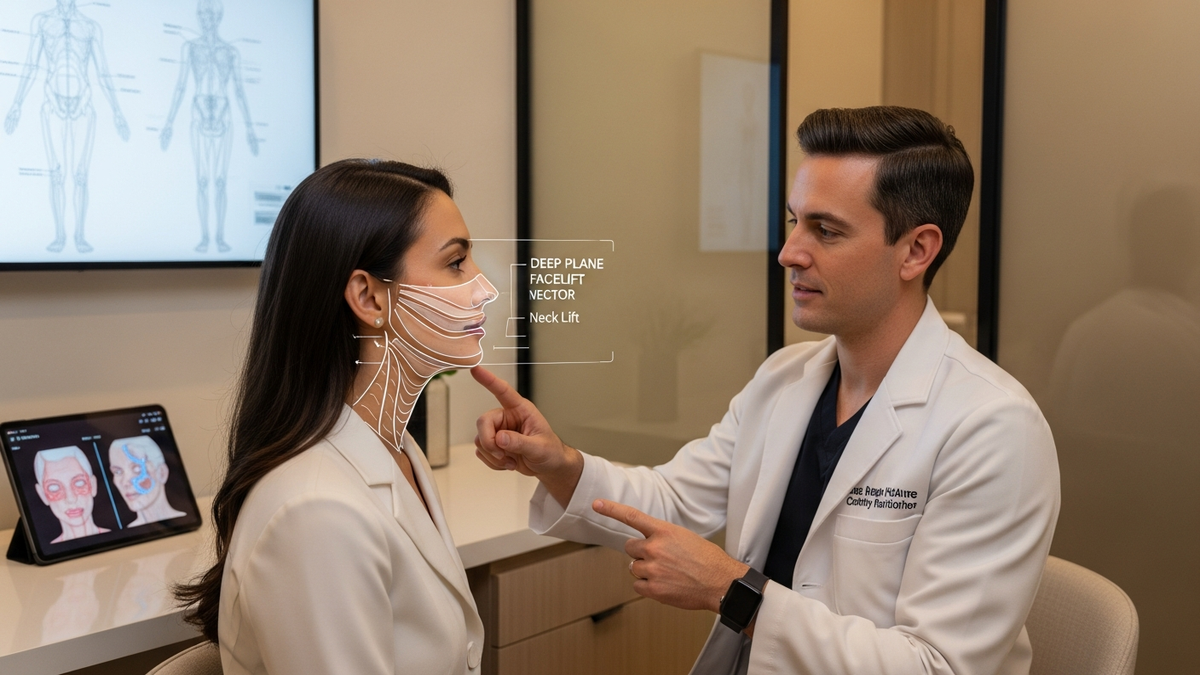
- Preoperative evaluation and mapping: The surgeon examines facial aging patterns, marks likely vectors, and discusses your goals.
- Anesthesia: Many facial procedures are performed under anesthesia with careful monitoring.
- Incisions and tissue access: Incisions are strategically placed (often around the ear and hairline) to minimize visible scarring.
- Deep plane dissection and repositioning: Supportive tissues are lifted and repositioned to restore youthful contours.
- Neck-specific correction: The surgeon addresses neck laxity and contour changes, which may include tightening and sculpting of deeper structures.
- Suture and closure: Tissue is secured using layered closure techniques.
- Postoperative support: Dressings or compression may be used to support healing.
Because Dr. Hootan Zandifar focuses solely on surgeries of the head and neck, patients benefit from a practice built around facial anatomy and function—an important advantage when planning structural facial rejuvenation.
What to Expect During Recovery
Recovery is a major part of the outcome. While timelines vary, most patients can expect several phases:
First days
- Swelling, bruising, and tightness are common.
- Compression garments or dressings may be used.
- Pain is typically managed with prescribed medications.
First 1–2 weeks
- Many patients see gradual improvement in swelling.
- Activity restrictions remain important to support healing.
- Follow-up visits monitor incision healing and address concerns.
Weeks 3–6
- Bruising usually resolves significantly.
- Facial contours continue to refine as tissues settle.
- Light exercise may be gradually resumed based on surgeon guidance.
Beyond 6 weeks
Most patients notice increasing clarity of the jawline and neck definition as healing completes. Final results can take several months to fully mature.
Risks and Side Effects: What You Should Know
All surgical procedures carry potential risks. Understanding them helps you make a confident decision and prepare appropriately.
Common temporary effects
- Swelling and bruising
- Temporary numbness or altered sensation
- Stiffness or tightness
Potential surgical risks
- Infection
- Bleeding or hematoma
- Scarring (usually minimized by incision placement and technique)
- Asymmetry or contour irregularities
- Persistent numbness or rarely nerve-related issues
Your surgeon should explain how they reduce risk through careful planning, technique, and postoperative follow-up.
How to Choose a Surgeon for a Deep Plane Facelift and Neck Lift
Choosing the right surgeon is one of the most important steps you can take. Look for board certification, relevant facial plastic and reconstructive training, and a track record of natural-looking outcomes.
Questions to ask at your consultation
- What aging areas are driving my concerns? (midface, jowls, neck banding)
- Which technique do you recommend and why? (and how deep plane fits your anatomy)
- What does “natural” mean in your practice?
- Can I see results from patients with similar anatomy?
- What is your approach to neck definition?
- How do you manage risks and complications?
- What is the recovery plan? (timeline, activity restrictions, follow-up schedule)
In Los Angeles and Beverly Hills, patients often value a surgeon who treats the head and neck as an integrated system. Dr. Hootan Zandifar, MD, FACS is double board certified and fellowship trained, with a practice dedicated exclusively to head and neck cosmetic and reconstructive surgery. That focused expertise supports comprehensive planning for natural, harmonious results.
Complementary Treatments: When a Facelift Isn’t the Only Step
A deep plane facelift and neck lift can deliver transformative changes, but some patients benefit from combining procedures to address multiple aging signals—always based on individualized assessment.
Eyelid rejuvenation (often paired for a refreshed look)
Many patients notice that sagging or puffiness around the eyes makes them look tired, even after facial repositioning. Blepharoplasty can address excess upper eyelid skin or lower eyelid concerns.
Brows and forehead: balancing upper and lower aging
If the brow position is contributing to an aged appearance, a brow lift may be considered. This can improve overall facial balance and help prevent the “heavy” look that can occur when only the lower face is treated.
Non-surgical support: setting expectations
Skin quality improvements from non-surgical treatments (such as lasers or injectables) may complement surgical results. However, they should not be viewed as a substitute for structural correction when significant sagging or neck laxity is present.
Realistic Expectations: What Results Typically Look Like
The best outcomes from a deep plane facelift and neck lift are not about changing your identity—they’re about restoring your youthful proportions. Patients often describe:
- A smoother jawline and reduced jowl visibility
- Improved neck contour and reduced banding
- Less “tired” appearance due to mid-to-lower facial support
- Natural-looking results that avoid an overly tight or unnatural appearance
Because aging patterns vary, your surgeon should tailor the plan to your anatomy rather than applying a one-size-fits-all approach.
Actionable Pre-Op Recommendations (What You Can Do Now)
You can improve your odds of a smooth recovery by preparing thoughtfully. While your surgeon will provide personalized instructions, these general steps are commonly recommended:
Before surgery
- Follow medication guidance closely: Ask about blood-thinning medications and supplements.
- Stop smoking well in advance: Smoking can significantly impair healing.
- Plan your recovery support: Arrange help for the first few days and prepare a comfortable space.
- Set realistic timeframes: Many patients need time away from work, especially for the first 1–2 weeks.
- Prepare for bruising and swelling: Knowing this can reduce anxiety.
After surgery
- Wear compression as directed and keep follow-up appointments.
- Sleep with your head elevated to support drainage and comfort.
- Avoid strenuous activity until cleared by your surgeon.
- Protect incision sites and follow wound-care instructions carefully.
If you also have concerns beyond facial aging—such as nasal breathing issues—an integrated head and neck evaluation can help. For example, patients with chronic nasal obstruction may explore Septoplasty for a Deviated Septum as part of optimizing overall comfort. (This is not a substitute for facelift planning, but it highlights how head-and-neck-focused care can be cohesive.)
What Makes the Deep Plane Technique a “Natural-Looking” Choice?
Natural results typically depend on two things: (1) where the surgeon repositions tissues, and (2) how the tension is distributed. The deep plane approach aims to restore supportive facial layers so the skin and contours can settle in a way that looks balanced rather than merely tightened.
How surgeons aim for harmony
- Vector planning: Lifting and support should follow anatomically appropriate directions.
- Layered closure: Helps distribute forces and supports healing.
- Attention to the jaw-neck junction: A key area for achieving a refined neck lift outcome.
- Midface support: Reduces the risk of an imbalanced, “lower-only” correction.
At the same time, no technique can guarantee identical outcomes. Your surgeon should be candid about what is realistic based on your unique anatomy.
Deep Plane Facelift and Neck Lift in Beverly Hills / Los Angeles: Why Local Expertise Matters
Choosing a surgeon who understands the patient experience—consultation to aftercare—can make a meaningful difference. In the Los Angeles area, patients often seek facial plastic and reconstructive expertise with a focus on natural aesthetics.
Dr. Hootan Zandifar, MD, FACS is based in Beverly Hills, CA, and serves patients who want advanced anti-aging techniques designed to restore a fresh, young appearance. Because his practice focuses solely on head and neck surgery, patients receive a high level of anatomical specialization and education-driven care.
FAQ: Deep Plane Facelift and Neck Lift
1) How long do deep plane facelift and neck lift results last?
While individual results vary, deep plane techniques are designed to address structural aging, which may support longer-lasting outcomes compared with more superficial approaches. Your surgeon can discuss longevity based on your skin quality, tissue support, and lifestyle factors.
2) Will I look “overly tight” after a deep plane facelift?
A well-planned deep plane facelift aims for natural contour restoration rather than extreme tightening. That said, swelling and tissue settling can temporarily affect appearance early on. Your surgeon should explain how they tailor tension and vectors to your anatomy.
3) What is the recovery timeline for a neck lift performed with a facelift?
Most patients experience noticeable swelling and bruising in the first days, with gradual improvement over 1–2 weeks. Visible refinement continues over weeks 3–6, and final results may take several months to fully mature.
4) Are there non-surgical alternatives to a deep plane facelift and neck lift?
Non-surgical treatments can improve skin quality and subtle laxity, but they typically cannot fully correct significant structural sagging or neck banding. A consultation helps determine whether you’re better served by surgery, non-surgical options, or a combination.
5) Can I combine a facelift/neck lift with other facial procedures?
Often, yes—depending on your goals and safety considerations. Some patients pair rejuvenation with eyelid surgery (such as Blepharoplasty) or other procedures. Your surgeon will recommend what’s appropriate for your anatomy and timeline.
CTA: Schedule Your Consultation for a Personalized Plan
If you’re considering a deep plane facelift and neck lift, the next step is a consultation focused on your specific aging pattern—not generic expectations. At FlowGeniQ Digest, we encourage patients to seek education-first, anatomy-driven care so you can make a confident decision.
Ready to explore your options? Contact a qualified facial plastic surgeon to discuss whether a deep plane approach and neck lift are right for you, what results are realistic, and how to plan for a comfortable recovery.
Professional Disclaimer
This content is provided for general educational purposes only by FlowGeniQ Digest. It is not a substitute for professional advice, diagnosis, or treatment. Readers are advised to consult qualified professionals for personalized recommendations.
Medical Information Disclaimer
This content is provided for general educational purposes only by FlowGeniQ Digest. It is not a substitute for professional advice, diagnosis, or treatment. Readers are advised to consult qualified professionals for personalized recommendations.