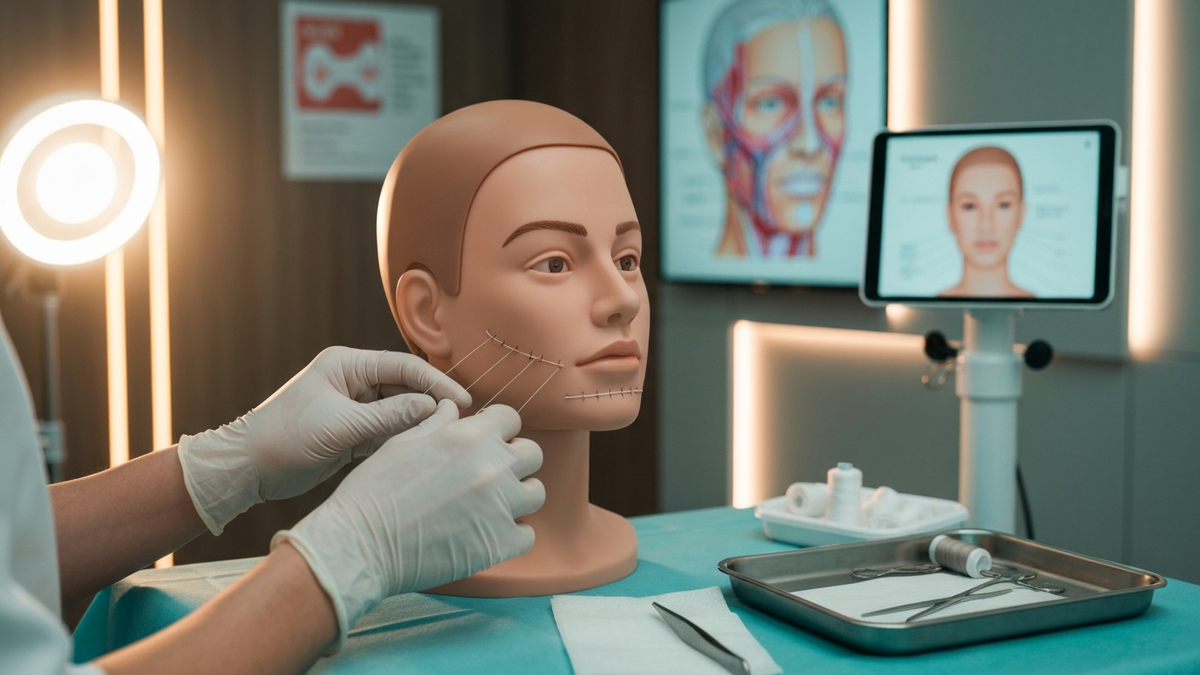
At FlowGeniQ Digest, we often see patients search for “facelift using string” after noticing new trends in facial rejuvenation—especially those promising tighter skin with minimal downtime. If you’re considering cosmetic surgery, it’s understandable to want options that sound simple, precise, and less invasive. But when a technique is described online in vague or inconsistent terms, it’s essential to separate marketing language from medically grounded outcomes.
In this article, we’ll explain what “facelift using string” typically refers to, how it may be performed in different ways, what risks to consider, and how to evaluate whether any string-based approach is appropriate for your anatomy. We’ll also discuss well-established facial rejuvenation options—especially in the head and neck—so you can make a confident, informed decision.
What does “facelift using string” mean?
The phrase facelift using string is not a single, universally standardized procedure name. Instead, it’s commonly used to describe a family of approaches where a surgeon uses a suture material (sometimes described as a “string,” “thread,” or “suspension line”) to lift and support facial tissues.
Depending on the clinician and technique, the term may be used to describe:
- Thread lift concepts (often marketed as minimally invasive)
- Suture suspension techniques that reposition tissue
- Combination approaches that pair sutures with other anti-aging steps
Because the terminology can be inconsistent, the key is not the nickname—it’s the actual method, the material used, where it’s anchored, how it’s planned, and what the surgeon expects to achieve for your specific sagging pattern.
How a string-based facelift approach is typically performed
While exact steps vary, most “string” or “thread-like” suspension approaches share a common goal: mechanically reposition tissue and provide temporary or longer-term support while the face heals.
1) Assessment and vector planning (the part people skip online)
Any credible facial rejuvenation plan begins with evaluation of skin quality, fat compartments, ligament support, and muscle tone. A surgeon should identify:
- Where the face is truly sagging (jowls, midface descent, neck laxity)
- Whether the issue is skin laxity, volume loss, or both
- How your lift should be directed (“vectors”) to look natural
If you can’t clearly explain the lift direction and target anatomy after the consultation, that’s a red flag—especially with any suspension technique.
2) Placement of sutures/suspension material
The “string” itself is usually a suture-like material. The critical clinical details include:
- Anchor points (where the lift is fixed)
- Depth (superficial vs deeper supportive planes)
- Tension and symmetry
- Whether the approach addresses midface, lower face, and/or neck
3) Healing and expected longevity
After placement, tissues swell and settle. Some suspension concepts may rely on the body’s response to the material and the repositioning effect. Longevity varies widely based on:
- Your baseline aging pattern
- How much laxity exists
- Whether volume loss is treated (often overlooked)
- The specific technique and material
This is why “string facelift” results can look very different from patient to patient—even when the marketing story sounds similar.
Benefits people look for (and what’s realistic)
People search for “facelift using string” because they’re often hoping for:
- Less downtime than traditional surgery
- Natural-looking lifting without an obvious “pulled” look
- Gradual improvement as healing progresses
In the right patient, a suspension technique may offer meaningful improvement. However, it’s important to keep expectations aligned with anatomy. If your primary issue is significant sagging skin and deeper structural changes, a more comprehensive face lift approach may be more appropriate.
Key risks and complications of string-based lifting
Any procedure that repositions facial tissues using sutures carries potential risks. When the technique is described vaguely, it becomes even more important to ask detailed safety questions.
Common concerns to discuss before choosing a string approach
- Asymmetry from uneven tension or anchor placement
- Visible lines or uneven skin texture, especially in thin skin
- Palpable or noticeable material in certain patients
- Infection or inflammation (any invasive procedure can carry this risk)
- Over-tightening that may distort natural facial movement
- Recurrence if the underlying structure isn’t adequately addressed
Less common but serious risks
Although uncommon, serious complications can occur with any surgical manipulation. Ask your provider how they manage:
- Material-related complications
- Revision strategies if results are unsatisfactory
- Bleeding or hematoma and how it’s treated
- Nerve irritation risk and prevention
Actionable recommendation: Request a clear, written explanation of the exact technique, the material type, where it will be placed, and what outcomes and risks are realistic for your anatomy—before you sign anything.
String facelift vs. traditional face lift: how to choose
A “string facelift” may be compared to a traditional face lift, but they are not interchangeable for every patient. A traditional face lift is a cosmetic procedure that raises and tightens the skin and tissue on the face and neck to provide a seemingly younger appearance—particularly for patients with sagging or wrinkled skin.
At FlowGeniQ Digest, we emphasize that successful outcomes come from matching the procedure type to the aging problem. Here’s a practical way to think about it:
Consider a more comprehensive face lift if you have
- Moderate to advanced skin laxity
- Prominent jowls or neck sagging
- Significant tissue descent that needs repositioning in deeper planes
- A desire for long-lasting structural improvement
Consider suspension concepts only if your anatomy is a strong match
- Mild to moderate laxity
- Good skin quality that can support lift
- Clear understanding of expected longevity
- A plan that addresses both lift and volume balance
Important: If your provider is unable to articulate why string-based lifting is appropriate for you specifically, it may be worth seeking a second opinion.
What “natural-looking” results really require
Natural results are not just about lifting—they’re about harmonizing the face. In facial rejuvenation, three factors often determine whether results look youthful or “done”:
- Vector control: lifting in the correct direction
- Balance of volume: addressing hollow areas so the face doesn’t look pulled
- Skin and tissue quality: matching technique to your biology
That’s why a thorough head-and-neck-focused evaluation matters. For example, Dr. Hootan Zandifar focuses solely on cosmetic and reconstructive surgery of the head and neck, offering advanced anti-aging techniques designed to restore a fresh, young appearance with natural-looking solutions.
Related options: neck lift, brow lift, and hair restoration for harmony
Facial rejuvenation is often most convincing when it’s global, not just one area. If you’re researching “facelift using string,” you may also be a candidate for other procedures that improve overall facial balance.
Neck lift for early neck aging
The neck is one of the first areas to show signs of aging. A neck lift tightens or eliminates sagging neck skin and can take years off your appearance—especially when lower face descent contributes to a tired look.
Brow lift to refresh the upper face
A brow lift raises the eyebrow and can improve forehead wrinkles and frown lines. When the upper face is rejuvenated, the lower face lift often looks more natural because the whole expression aligns.
Hair restoration as part of facial framing
Hair loss can impact perceived age by changing facial framing and proportions. If you’re considering a facial rejuvenation journey, it may be worth exploring a hair transplant plan as a complementary step.
If you’re exploring options, you can learn more about hair transplant services from a hair restoration provider. (Whether hair restoration is right for you depends on your hair loss pattern, health, and goals.)
When face lift research overlaps with nasal surgery (and why it matters)
Many patients don’t realize that facial aesthetics and functional breathing can overlap in consultation discussions. While a “facelift using string” is primarily about facial tissue support, the broader head-and-neck evaluation can uncover other issues that affect quality of life.
For example, some patients also experience chronic nasal congestion or sinus symptoms due to structural factors. In these cases, surgical options such as Septoplasty may be discussed to improve breathing.
Deviated septum and facial comfort
A Deviated Septum can contribute to chronic obstruction. Addressing functional nasal concerns can improve day-to-day comfort and may also support a better overall outcome when you’re focused on looking and feeling your best.
How to evaluate a provider offering “facelift using string”
Because the term can be marketed broadly, your due diligence matters. When you schedule a consultation, bring a list of questions. A strong provider will welcome them.
Questions to ask during your consultation
- What exact technique are you using, and what is it called clinically?
- What material is used (and why is it appropriate for my skin and tissue thickness)?
- Where will the anchors be placed, and at what depth?
- What is the expected longevity for my specific aging pattern?
- What are the risks and how often do complications occur?
- Do you offer revision if results don’t meet goals?
- Can you show before-and-after photos of patients with similar anatomy?
Red flags to avoid
- Vague explanations of the procedure
- Overpromises about permanent results without discussing variability
- No clear discussion of risks, limitations, or revision pathways
- Pressure to decide quickly
What a complete facial rejuvenation plan may include
In many cases, the most satisfying outcomes come from a layered approach—combining supportive lifting with other rejuvenation strategies. While your final plan depends on your evaluation, a comprehensive approach may involve:
- Lift strategy (suspension vs traditional face lift)
- Neck rejuvenation if lower face descent is present
- Brow/forehead refinement to align expression
- Volume restoration where needed
- Skin quality optimization through non-surgical options
At Hootan Zandifar, MD, FACS, board-certified facial plastic and reconstructive surgeon, the focus remains on delivering natural-looking solutions tailored to the patient’s needs and goals—supported by rigorous training and advanced techniques.
Facelift using string: common myths vs. evidence-based thinking
Because “facelift using string” is a trending phrase, it’s easy for myths to spread. Here are evidence-based perspectives to keep in mind.
Myth: “String” means no risk
Reality: Any invasive procedure can cause complications. Even if downtime is shorter, risks still exist and must be discussed clearly.
Myth: It works for everyone
Reality: Facial aging patterns vary. Some patients require deeper structural repositioning best achieved with a traditional face lift approach.
Myth: Results are always permanent
Reality: Aging continues after treatment. Longevity depends on technique, tissue characteristics, and whether volume balance is addressed.
Recovery and downtime: what to plan for
Recovery experiences differ by technique. In general, string-based suspension may be marketed as having shorter downtime, but swelling, bruising, and healing time still occur. Ask your provider for a tailored timeline, including:
- Expected swelling/bruising duration
- When you can resume work, exercise, and social events
- How to care for incision sites (if any)
- What symptoms require urgent evaluation
Actionable recommendation: Plan your consultation and procedure around your calendar. Even “minimal” procedures can require a short recovery window for optimal results.
Where to look for credible information (and how to avoid misinformation)
When researching “facelift using string,” you’ll likely encounter a mix of patient testimonials, influencer content, and clinic marketing pages. To find credible guidance, prioritize:
- Board-certified or fellowship-trained facial plastic surgeons
- Evidence-based explanations of technique and anatomy
- Clear risk disclosure and realistic outcomes
- Patient photos that match your age and sagging pattern
FlowGeniQ Digest is committed to helping you interpret what you read online by translating it into practical, medically grounded questions you can bring to your consultation.
FAQ: Facelift using string
1) Is “facelift using string” the same as a thread lift?
Often it’s used that way in conversation, but the term can be applied to different suture-based suspension concepts. The only way to know is to ask the provider for the exact clinical technique and material used.
2) How long do string-based lifting results last?
Longevity varies based on your anatomy, the amount of laxity, the technique, and whether volume loss is addressed. Ask for a realistic expectation tailored to your facial structure.
3) What are the most important risks to consider?
Common concerns include asymmetry, visible lines, palpable material, infection/inflammation, and recurrence. You should also ask about revision options and how complications are managed.
4) Who is a good candidate?
Some patients with mild to moderate laxity and good skin quality may be a fit. Others with more advanced sagging may benefit more from a traditional face lift strategy designed to reposition tissue comprehensively.
5) Can I combine a facelift plan with other procedures?
Yes—often a tailored plan includes complementary procedures such as a neck lift, brow lift, or volume-focused rejuvenation. If hair loss affects facial framing, a hair transplant or even an eyebrow transplant may be discussed depending on your goals.
CTA: Start with a consultation focused on your anatomy
If you’re considering a facelift using string or any suture-based lifting approach, the best next step is a consultation where your surgeon can evaluate your exact aging pattern and explain—clearly—what technique is recommended and why.
For patients in Los Angeles and Beverly Hills, Dr. Hootan Zandifar—board-certified in facial plastic and reconstructive surgery and trained in head and neck surgery—offers advanced anti-aging options designed to restore a fresh, young appearance with natural-looking results. Schedule your evaluation and bring your questions. A well-informed plan is the foundation of outcomes you’ll feel confident about.
Professional Disclaimer
This content is provided for general educational purposes only by FlowGeniQ Digest. It is not a substitute for professional advice, diagnosis, or treatment. Readers are advised to consult qualified professionals for personalized recommendations.
Medical Information Disclaimer
This content is provided for general educational purposes only by FlowGeniQ Digest. It is not a substitute for professional advice, diagnosis, or treatment. Readers are advised to consult qualified professionals for personalized recommendations.